
Blue Light, Red Light, No LightWhy Screens Keep You Awake
By The Computer Solution · August 11, 2026
TL;DR
- Your eyes have special cells that watch for blue light. It is not a habit you picked up. You were born with it.
- When those cells see blue light, your body stops making melatonin, the chemical that makes you feel sleepy.
- Sunlight is full of blue light. So is your phone screen. Your body cannot tell the difference.
- Night mode helps a little, and the research on it is weaker than most people assume. It is free, so use it, but do not count on it.
- The thing that actually works is putting the screen down an hour before bed, and charging it somewhere other than your nightstand.
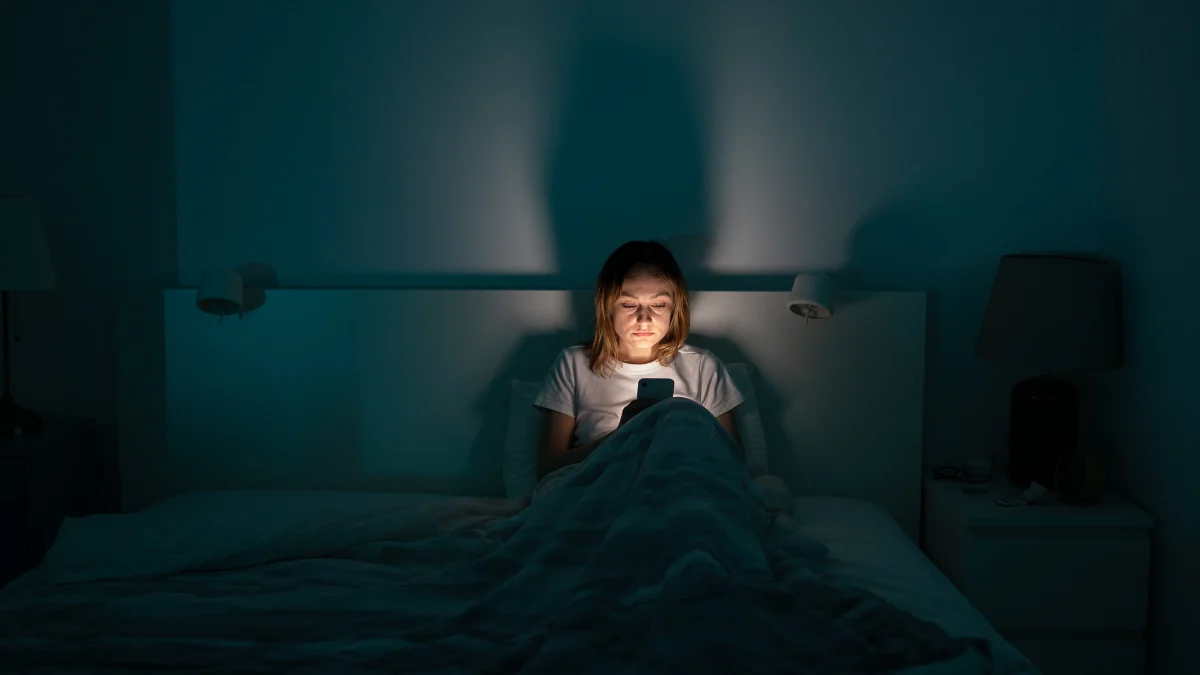
You know the feeling. You are tired, you get into bed, and you pick up your phone for “just a minute.” Twenty minutes later you put it down, close your eyes, and you are wide awake.
That is not a willpower problem. Something physical happened, and it is worth understanding, because once you know what your body is doing, the fix makes a lot more sense.
Your eyes are doing a job you never taught them
This is not something you learned as a kid. You were born with it.
Inside your eyes there are special cells whose only job is to watch for blue light. They are not there to help you see. They are there to tell your body what time of day it is. When those cells notice blue light, they send a signal straight to the clock inside your brain, and that clock makes a decision.
The decision is about a chemical called melatonin. Melatonin is what makes you feel sleepy. Your body makes it when it gets dark, which is why you start feeling heavy-eyed in the evening.
When those cells in your eyes see blue light, your body stops making melatonin. Not slows down. Stops. And when melatonin stops, the sleepy feeling goes with it.
Why blue light, of all things
Because that is what daylight is made of. Sunlight is packed with blue light, and it is strongest in the middle of the day. As the sun goes down, that blue drops away and everything turns warm and orange.
So your body has a simple rule, and it has worked for a very long time:
- Lots of blue light means it is the middle of the day. Stay awake and alert.
- Warm light, then darkness means the day is ending. Start making melatonin. Get sleepy.
For almost all of human history there was nothing bright enough at night to confuse that rule. A candle is not going to fool anybody. Then we invented a small, very bright screen and held it eight inches from our faces at eleven o’clock at night.
Your body is not guessing. It is measuring.
This is the part most people get wrong. Your body is not making a judgment call about whether it feels like bedtime. It is reading the light in front of your eyes and running a chemical process based on what it finds. Your phone is not tricking your opinion. It is tricking your chemistry.
Red light: turn your screens warm at night
The obvious idea is to make your screen less blue at night, and every device you own can already do it for free. Here is where to find it:
- Windows: Settings, then System, then Display, then turn on Night light
- Mac: System Settings, then Displays, then Night Shift
- iPhone or iPad: Settings, then Display & Brightness, then Night Shift
- Android: Settings, then Display, then Night Light or Eye comfort, depending on your phone
Set it to turn on by itself at sunset and you never have to think about it again. There is also a free app called f.lux that has done this for years and gives you more control over how warm it goes. I run it on my own machines.
Now here is the honest part, and I would rather tell you than sell you. The research on these filters is not as strong as people assume. They do cut some blue light, which is real. But studies looking at whether they actually improve sleep have come back weak or mixed. The same goes for blue light glasses, which health sources have looked at and largely not backed up.
So turn night mode on. It is free and it takes a minute. Just do not expect it to solve the problem, because there is a bigger reason you are still awake.
No light: the part that actually works
A warm screen is still a screen. It is still bright, and more importantly, it is still interesting. An argument in a comment section will keep you awake no matter what color it is. Night mode changes the light. It does not change what the light is showing you.
At least an hour before bedtime is the best time to turn the screens off entirely, to let your brain wind down so you can get better quality sleep and wake up more rested. That is the piece with real evidence behind it, and it is also the piece nobody wants to hear.
If a whole hour sounds unrealistic, do not throw the idea out. Start with fifteen minutes and see how it goes. Any gap between the last screen and the pillow beats no gap at all.
Get the phone off the nightstand
It is a good, healthy idea to charge devices far away from the bed and have a separate alarm clock.
Two things happen when your phone is your alarm clock. It is the last thing you look at before you close your eyes, and it is the first thing you reach for when you stir at 2am. That is how “what time is it” turns into forty minutes of scrolling in the dark.
A cheap alarm clock on the nightstand and the phone charging across the room fixes both at once. It also means you have to physically stand up to shut the alarm off, which is either a great feature or a personal insult, depending on the morning.
If you have teenagers, this one matters more
Teens are more sensitive to blue light than adults are, and their body clocks already push them toward staying up later. Add a phone at bedtime and it compounds. The phone-charging-in-the-kitchen rule sounds strict, but it is doing real work.
The honest bottom line
I fix computers. I am not a doctor, and I am not going to tell you what any of this does to your health. What I can tell you is where the light is coming from, what it does to a chemical your body makes, and which of the popular fixes actually hold up.
Short version: turn night mode on because it is free. Put the phone down because that is the part that works.
If you are sorting this out for a whole household rather than just yourself, it is one item on a longer list. My ten tech tips for a safer and easier school year covers the rest, from device security to backups to knowing when to just ask for help.
And if the reason you are lying awake at 2am is that your computer has been driving you up the wall all day, that one I can actually fix. Or just get in touch and we will sort it out.
Got a computer problem in Durango?
Free assessment, honest answers, you only pay when it’s solved.