
Easy Ways to Talk to a TechnicianAbout Computer Issues
By The Computer Solution · November 23, 2026

TL;DR
- You can tell when something is wrong. Explaining it is the hard part, and that is what stops people calling.
- Everything comes down to two things: what you expected, and what actually happened.
- If those two match, nothing is wrong. When they stop matching, something is.
- The sentence is: “When I do X, Y happens” or “When I do X, Y does not happen.”
- You never have to name a part. Describe what you saw, because I was not there and you were.
- It works on a mechanic, a plumber or an appliance repairman just as well as on me.
You can usually tell when something’s wrong with your computer. It’s not acting right, yet explaining it to someone else can be the hard part.
One thing that I’ve heard countless times from my clients is, “I’m not a computer person, but…”
It’s that one statement that silently says, “Please don’t judge me for not understanding the language.”
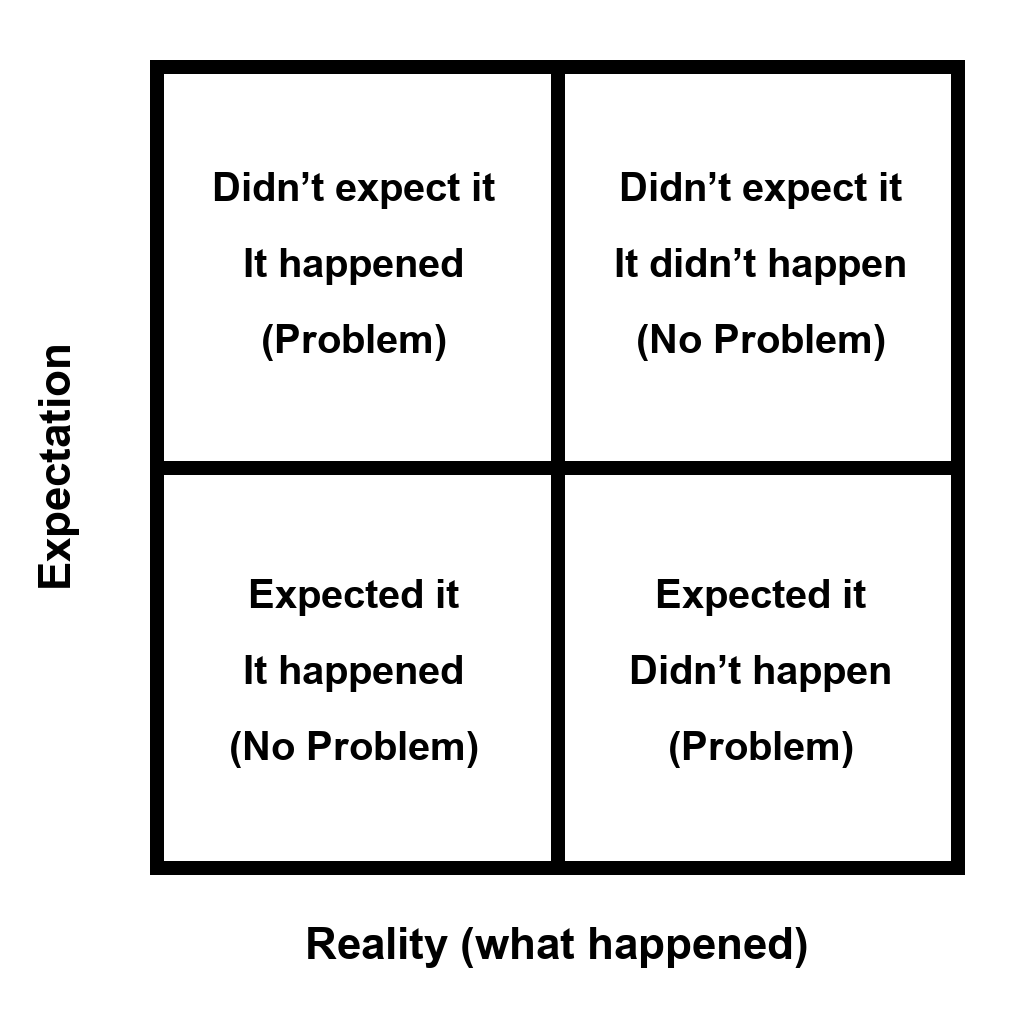
So I found a very simple way that anyone can describe an issue they’re having simply by acknowledging two things: Your expectation and the reality.
When the expectation and reality are the same thing, there’s nothing wrong and things are running smoothly. It’s when reality no longer matches the expectations that you know something is wrong.
When things don’t seem right there’s generally one of two things going on:
- You expect something to happen, it doesn’t happen
- You didn’t expect something to happen, and it happens anyway
The method you need
So let’s say you call me up on a random Tuesday, because you tried to print something and all of a sudden today, the printer won’t respond to anything you do, or maybe your screen is no longer displaying anything.
How you explain the situation can set the tone for call.
Let’s say you get me on the phone, and you tell me “My printer is acting up.” That’s a fine place to start, but it’s just half of what’s needed. The other half is the one that does all the work, and you get to it by asking yourself a question: acting up how? There are many ways for a printer to act up.
So what I would want to know on the phone is what is the unexpected result here. Pages are streaky, or have lines, not printing certain colors, putting out blank pages, or just not responding at all. Whatever answer comes back, you’ve just put together the sentence that tells me what I need to know.
That’s the method, and it works on anything. Acting up when? Making a noise while you do what? Put the when in front of the what, and you’re describing a problem instead of a mood.
Here’s the structure:
- “When I do X, Y happens.”
- “When I do X, Y doesn’t happen.”
“When I try to print a document, the printer doesn’t respond at all.” “When I press the power button, lights come on, but nothing shows up on the screen.” “When I turn on my computer, there’s a loud buzzing sound from the back every time.”
None of those sentences have to name a part or describe exactly what’s wrong, they simply describe what you observed happen. That’s the most important part of it because I wasn’t there to witness the unexpected event. You were.
When you use that method to tell me what’s going on with the computer, I immediately have an idea of what might be the best way to help you with necessarily having to go through a bunch of questions to get to the bottom of the issue.
Real life examples
So you go out one morning, climb into the car and turn the key. Nothing happens. You didn’t need a mechanic to tell that something was wrong, you just knew it the second that it happened. You expected the engine to start and it didn’t. “When I went out to start my car, nothing happened.”
Now on a different day, let’s say you get into your car, it starts up fine and you head to work and suddenly you hear a grinding noise that you’ve never heard before. You knew something was wrong that time as well. You didn’t expect to hear a foreign noise, yet there it was. “When I was driving, I suddenly heard a grinding noise coming from the back of the car.”
We assess the world around us by comparing expectations of events to the reality that’s happening.
You’ve been making these observations your whole life, you just didn’t realize you were doing it.
So, when you expect the car to start, and it does. No problem.
Or, when you don’t expect to hear a grinding noise, and there’s no noise, also no problem.
Those are what a normal day feels like, and they’re the reason you can drive to work without thinking about any of this.
And as you already know, it’s not only about your car. This method is how you know there’s ever anything wrong, and how to describe it to a professional. Whether it’s a drain issue in your sink, a washing machine not working right, or your car: When I go to X, then Y happens (or doesn’t happen).
Real life computer examples
You don’t need to know what the parts are called, or even understand their functions.
You didn’t expect it, and it happened. You’re reading something online and suddenly the whole screen is covered by a warning about a threat on your computer, telling you to call an 800 number right away. You weren’t expecting that. There it is. Something’s wrong. (By the way, don’t ever call that number on your screen.)
You expected it, and it didn’t happen. You press the power button. Nothing. No lights, no screen, no fan, nothing at all. You were expecting a computer to turn on and it didn’t. Something’s wrong.
Neither of those needs a name before you call. You saw it happen, and that’s enough to start.
Don’t talk yourself out of it
What surprises me is how often I hear a statement like, “Well it’s been doing this for four months and I finally decided I’d had enough.” People talk themselves out of getting some professional feedback for months at a time, while the issues stack up.
Let’s say one day, you hear a slightly annoying buzzing sound coming from the back of the computer, but decide to just deal with it for now. What seems like only a mild buzzing, is probably a cooling fan that’s failing. One day the buzzing goes away and you think that it’s resolved, but it actually just got worse. The fan didn’t fix itself, it stopped spinning at all and now your computer can’t keep itself cool. It overheats and starts crashing. Now what would have been a simple cooling fan replacement, is a major issue causing a lot more damage.
You don’t have to decide whether it’s serious. That’s not your job and it never was. If something surprised you, that’s reason enough to ask. If it turns out to be nothing, you’ve spent a little time on a phone call and gained an answer.
What I’ll ask you next, and why
I won’t necessarily be able to tell you exactly what’s going on from the first sentence, but I’ll have a much better idea of specific questions to ask in order to isolate the issue.
Say you call and tell me the laptop screen is black and nothing’s showing. On its own that’s got several possible causes, so I’ll ask you one question that moves us a step further.
“Are there any lights on the keyboard, or around the edge of the laptop?”
If there aren’t any, we’re looking at a power problem. If there are, then I’ll ask you something else.
“If you move the mouse, do you see a pointer moving across the black screen?”
If you do, the computer’s actually running. It’s the desktop that hasn’t loaded, which is a different problem entirely.
Two questions and we’ve gone from “the screen is black” to a very short list of answers. At this point I’ll probably ask you something like what happened just before this, like a power outage, a coffee spill, or maybe it just worked yesterday and today it’s like this.
Through that very simple process was your one sentence, my two or three questions, and you never had to name a computer part, or understand how computers work.
I probably won’t know the cause
Almost everybody asks me this kind of question. “What caused this?” or “Why did this happen?” I want to be straight with you about it. Most of the time I really don’t know. I wasn’t there when it happened.
The simplest explanation I have is this: Everything that works, works right up until it doesn’t. That’s true of cars, water heaters, and every computer ever built.
What I can tell you is what’s wrong now and what it’s likely going to take to fix it.
And sometimes there’s nothing to find by looking, which is its own reason to trust what you noticed. A computer can be infected with nothing to show for it: no warning, no scan result, nothing but a surprise you can’t explain. That surprise was the whole case.
Use it with anyone, not just me
None of this is specific to The Computer Solution. Take the same two halves to a mechanic, a plumber, or an appliance repairman.
“When I ____________, I expected this. I got this instead.”
They’ll know what you mean straight away.
If something unexpected happens
If your expectations don’t match the reality with your computer right now, give me a call and I’ll make the repair process as quick and simple as I can.
Got a computer problem in Durango?
Free assessment, honest answers, you only pay when it’s solved.